
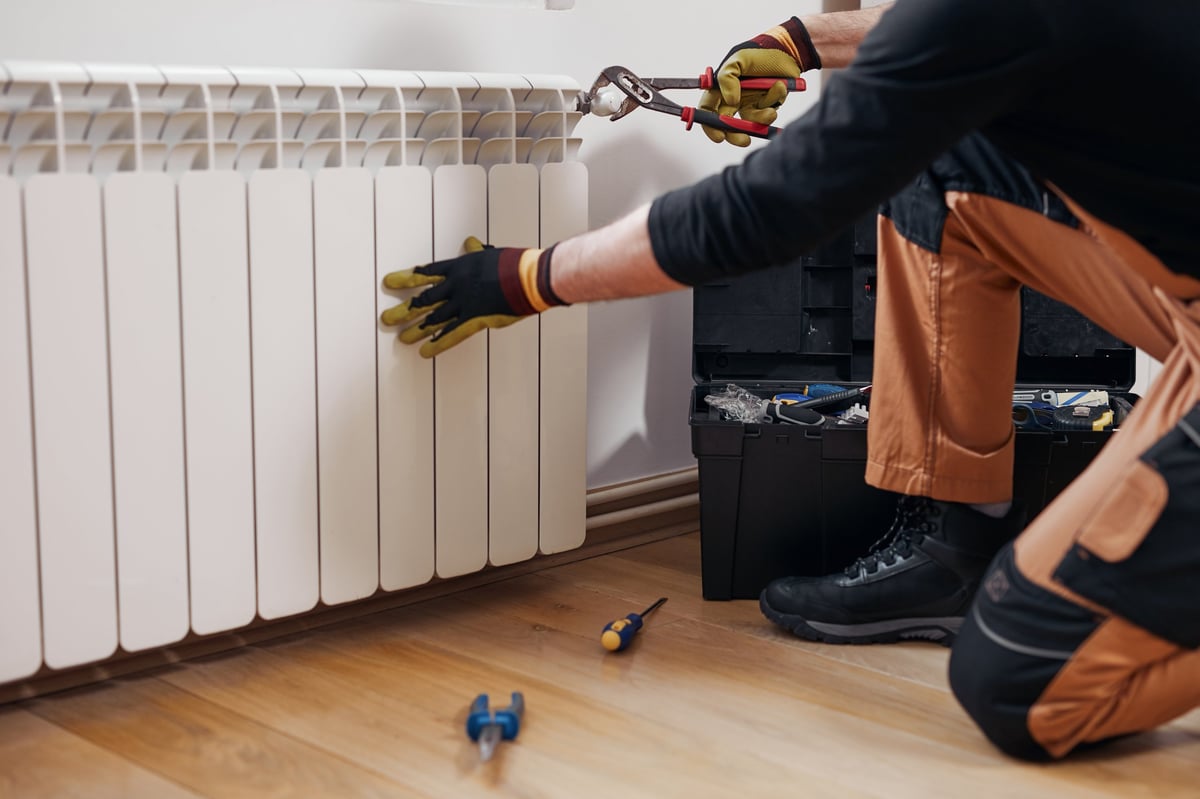
One radiator staying cold while the rest of your radiators heat normally usually points to a problem affecting that radiator rather than the whole central heating system. Trapped air, a closed or sticking radiator valve, poor system balancing, sludge or restricted water flow are among the most common causes. The important first step is to identify how the radiator is cold before trying to fix it.
Why is one radiator staying cold when the others are hot?
One radiator staying cold while other radiators are working normally usually means hot water is not circulating properly through that individual radiator. Common causes include trapped air, a closed or faulty thermostatic radiator valve, a lockshield valve problem, sludge, an obstruction or an incorrectly balanced heating system.
Start by comparing the problem radiator with the others. Ask yourself:
- Is the whole radiator cold?
- Is only the top cold?
- Is only the bottom cold?
- Is one side hotter than the other?
- Does it warm slightly and then go cold?
- Has the radiator recently been turned off?
This simple check can narrow down the likely cause before anything is adjusted. For fault finding across the whole system, see our radiator repair services.
What should you do first when one radiator is cold?
If one radiator is cold, first make sure the central heating is actually running and other radiators are warming normally. Then check whether the thermostatic radiator valve or manual valve on the cold radiator is turned on. Carefully compare the radiator's temperature from top to bottom before deciding what to do next.
Use this quick checklist:
- 1Confirm the heating is switched on.
- 2Check whether other radiators are heating normally.
- 3Check the cold radiator's valve setting.
- 4Carefully determine whether it is cold at the top, bottom or everywhere.
- 5Look for obvious water leaks around the radiator and valves.
- 6Only then decide whether bleeding or professional investigation is appropriate.
Do not automatically bleed every cold radiator. The temperature pattern matters.
What does a radiator cold at the top but warm at the bottom mean?
A radiator cold at the top but warm at the bottom usually indicates trapped air. Air collects at the highest point of the radiator and prevents hot heating water from filling that section properly. Bleeding the radiator can release the trapped air and restore more even heat distribution.
How should you bleed a cold radiator safely?
- turn the central heating off
- allow the radiator and pipes to cool
- have a radiator key ready
- protect nearby flooring or walls with a cloth
Open the bleed valve carefully until trapped air escapes. Once the air has gone and water begins to appear steadily, close the valve without overtightening it. Afterwards, check your boiler's pressure in accordance with the manufacturer's instructions, because boiler pressure can fall after radiators have been bled. Read the Worcester Bosch guide to bleeding radiators.
If pressure drops after bleeding, our guide on a boiler that keeps losing pressure explains what to check.
What does a radiator cold at the bottom but warm at the top mean?
A radiator cold at the bottom but warm at the top is more likely to indicate sludge, debris or restricted circulation than trapped air. Rust particles and other deposits can settle in the lower part of a radiator and prevent hot water from circulating evenly through it. Read the Worcester Bosch radiator cold at the bottom guidance.
Signs that may support this diagnosis include:
- several cold patches along the bottom
- slow radiator warm-up
- discoloured heating water
- other radiators beginning to develop similar problems
- an older central heating system
Repeatedly bleeding a radiator will not normally solve sludge at the bottom. Professional system cleaning or a power flush may be necessary after the cause has been properly assessed.
Why is the whole radiator completely cold?
A completely cold radiator can be caused by a closed radiator valve, a sticking thermostatic radiator valve, restricted flow, poor system balancing or an internal blockage. If other radiators are heating normally, the problem is more likely to be local to the radiator than a complete boiler failure.
Start with the simplest check. Make sure the thermostatic radiator valve, commonly called a TRV, is not set to its lowest or frost-only setting. If the valve appears correctly set but the radiator remains completely cold, a valve component may be sticking or water may not be flowing through the radiator properly.
Do not dismantle valves if you are unsure what you are doing. Water from a heating system can escape quickly if a pressurised connection is opened incorrectly. Our radiator repair engineers can check TRVs, lockshields and flow safely.
Could the radiators need balancing?
Yes. If some radiators heat quickly while another remains cool or takes much longer to warm, the central heating system may need balancing. Balancing controls how heating water is distributed through each radiator so that one part of the system does not receive disproportionate flow.
| Symptom | Possible explanation |
|---|---|
| Radiators nearest the boiler heat very quickly | Excess flow through nearby radiators |
| Distant radiator stays cooler | Insufficient flow |
| Large differences between rooms | System may need balancing |
| Radiator heats very slowly | Flow restriction or balancing issue |
Where uneven heat is down to distribution rather than a fault, our central heating balancing service can help.
What if the radiator is still cold after bleeding it?
If a radiator remains cold after trapped air has been removed, stop repeatedly bleeding it and investigate other causes. A sticking valve, sludge, restricted pipework, poor balancing or another circulation problem may require professional diagnosis rather than continued homeowner adjustments. Repeatedly releasing water unnecessarily can also lower system pressure.
A heating engineer can check:
- thermostatic radiator valves
- lockshield valves
- radiator flow and return temperatures
- system balancing
- sludge or corrosion
- circulation and the heating pump
- boiler pressure
- pipework restrictions
Our central heating repair service covers these checks across Bedfordshire, Hertfordshire, Buckinghamshire and North London.
Does a cold radiator mean the boiler is faulty?
One cold radiator does not usually mean the boiler itself has failed if every other radiator is heating correctly. If several or all radiators are cold, however, the problem may involve boiler settings, system pressure, the circulation pump or another central heating component.
Check the boiler display for an error code and refer to the manufacturer's instructions. If the boiler is gas-fired and the fault requires work on the gas appliance, use an appropriately qualified Gas Safe registered engineer. Under the Gas Safety (Installation and Use) Regulations 1998, gas work within scope must be undertaken by appropriately competent registered persons. Read the HSE gas safety advice for homeowners.
For boiler or gas appliance faults, speak to our boiler repair team or a Gas Safe registered engineer.
When should you call a heating engineer for a cold radiator?
Call a heating engineer if one radiator remains cold after basic checks, the valves appear faulty, the radiator has persistent cold areas, the problem keeps returning or you suspect sludge, restricted circulation or a wider heating-system fault. Professional diagnosis can prevent unnecessary replacement of parts that are actually working correctly.
You should also seek help if:
- radiator valves are leaking
- boiler pressure continually falls
- several radiators stop working
- you repeatedly need to bleed the same radiator
- heating pipes make persistent unusual noises
- the boiler displays a recurring fault code
Frequently asked questions
Why is one radiator not heating up but all the others are?
The most likely causes are trapped air, a radiator valve problem, restricted water flow, sludge or poor system balancing. Determine whether the radiator is cold at the top, bottom or completely before choosing the next step.
Should I bleed a radiator if it is completely cold?
Not automatically. Bleeding is most useful when trapped air is present, particularly when the radiator is cold at the top. A completely cold radiator may instead have a valve or circulation problem.
Why is my radiator cold even though the valve is open?
The valve may be sticking internally, the lockshield may be restricting flow, the system may need balancing or sludge could be preventing water from circulating.
Why does the same radiator keep filling with air?
Repeated trapped air can indicate an underlying central heating issue. If the same radiator needs frequent bleeding, arrange professional assessment rather than treating it as routine maintenance.
Can sludge make one radiator completely cold?
Yes. Heavy contamination or a significant restriction can reduce or prevent circulation through a radiator. Sludge more commonly creates cold lower sections, but severe restrictions can affect the whole radiator.
Need help with one radiator staying cold?
A single cold radiator is often straightforward to diagnose, but the correct fix depends on the temperature pattern and how water is flowing through the system. Our engineers can inspect radiator valves, circulation, system balance and system condition across Bedfordshire, Hertfordshire, Buckinghamshire and North London.